Classic themes: Defining Classic Space

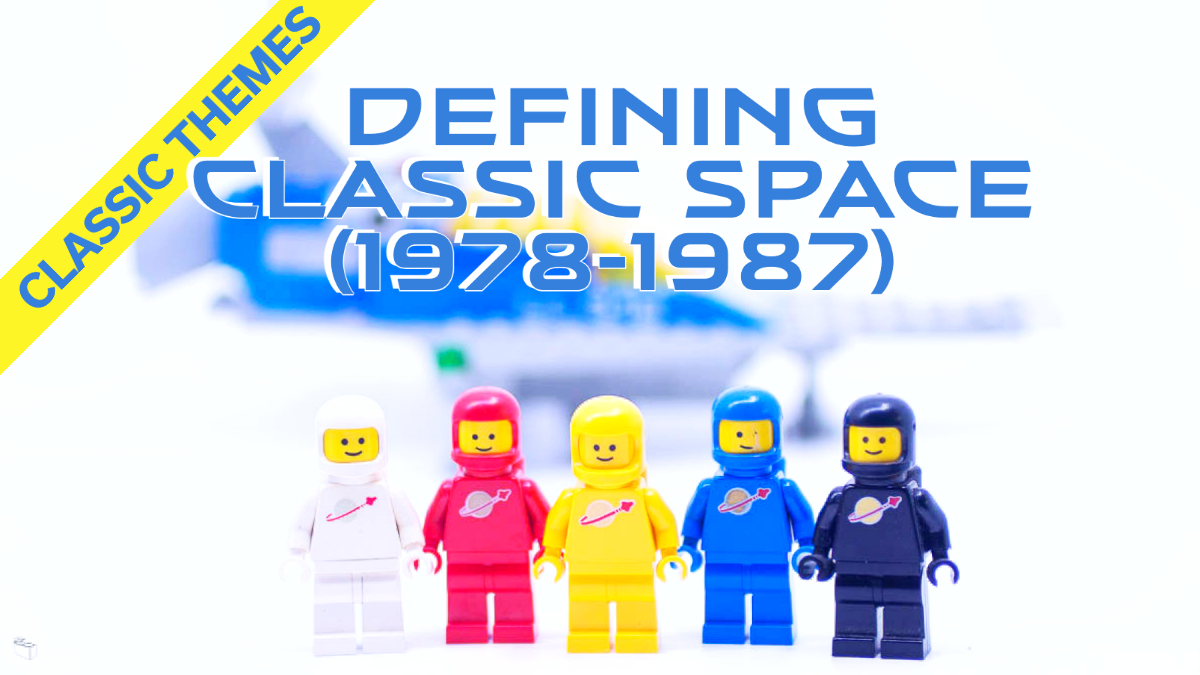
The recent arrival of the 2022 LEGO City Space sets has left some people myself included, wondering if the spirit of Classic Space has returned, while others remained unsatisfied, stating reasons of not enough blue and grey, an absence of transparent yellow, or that the blue in the windscreens was just not dark enough. But what does Classic Space actually mean?

Virtually everyone will agree that the period began in 1978, with the release of the first LEGO Space sets to feature minifigures. But when does it end? And what is it that makes those sets ‘Classic Space?’

Continue reading

Whatever Happened To Classic Town IV: Welcome to LEGO City

When Minifigures arrived on the scene in 1978, we were presented with three settings: Castle, Town and Space – The Past, The Present and The Future. Through the 1980s, these themes developed in their own ways, fairly independent of each other. During the 1990s, we saw the themes diversify in different ways: Space brought us a new hyperfluorescent faction each year; Castle changed a little less frequently, but introduced an increasing amount of magic. In the meantime, Town diversified: no longer the sole home of contemporary lifestyles, we saw different themes split off, containing subject material based on the contemporary real world: Divers, Paradisa, Outback, Race, Space Port, ResQ, Team Extreme, and Sports. The ‘core material’ – which we first saw back in 1978 – police, fire and construction – became increasingly juniorized. Having been further dumbed down for younger builders with the introduction of Jack Stone, and other 4Juniors sets, we saw a return to more mature material with LEGO World City.

However, both the 4Juniors and World City themes featured alleged models of modern vehicles that bore minimal resemblance to the real-world equivalent. After the LEGO Group’s financial crisis, a number of themes were discontinued, and the company set out to return to its core business. A revitalised town theme was introduced – but things were on their way to being a bit bigger; expectations were greater: Town just wasn’t going to cut it anymore: we were presented with LEGO City.

Continue reading

Whatever Happened to Classic Town Part III: Into The Dark Ages

Welcome back to our exploration of classic themes. When we last visited LEGO Town, it was in the process of becoming juniorized. The Classic Town that many had grown up with was becoming an almost cartoonlike parody of itself. From 1978 through to the early ’90s, Town had a certain degree of simplicity, but with style. It was always striving to be its best, held back by the limits of the system, rather than the ability of the builder.

During the ’90s we saw the diversification of design: elements were used across many themes, we saw a broadened colour palette, and as time went by, we saw more themes/subthemes depicting aspects of contemporary life: Paradisa, Divers, Race, Outback, Arctic, Spaceport, Extreme Team and Res-Q. Towards the end of this era, the traditional town sets – fire, police, construction – were labelled ‘city’ and we saw a juniorization of some of the sets; a reduction in complexity, and perhaps a slight step away from attempting a realistic appearance.

Continue reading

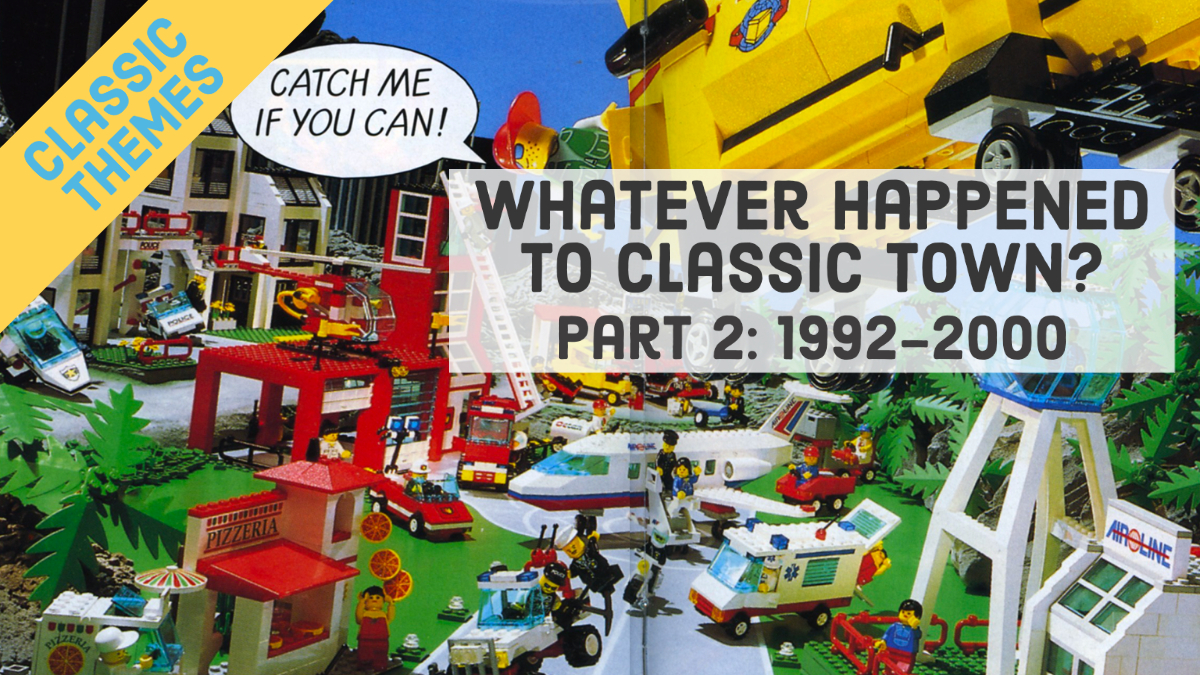
Whatever Happened to Classic Town? Part 2: 1992-2000

Welcome back to our occasional series examining ‘Whatever Happened to Classic LEGO Themes?’ Previously, we took a look at the Classic town sets from 1978-1990.

We examined the way that the theme was defined by certain colours, shapes, and how a gradually expanding parts palette resulted in an evolution in the design of sets during this period. In 1978, when the LEGOLAND branded sets were first released, along with LEGO Minifigure, this was the theme set in the present, the real world, containing subject matter that kids could relate to: LEGO Town was set in the contemporary world, bringing kids experiences they could understand.

In this article, we shall trace the development of these ’Real World’ LEGO sets during the ‘System Era.’ The ‘System’ label, with the red 2×4 in place of the arm on the letter ‘T,’ was used to distinguish the other brick systems used in LEGO construction toys at this time: DUPLO and TECHNIC. The mark appeared in the upper left corner of the front of LEGO Boxes, to the right of the LEGO logo. This label appeared on LEGO Sets released from 1992 to 1999.

Continue reading

Whatever happened to Classic Town? Part I: 1978-1990

This year, I am looking at how LEGO Themes developed from those early days in 1978. Castle, Town and Space all developed in their own way, and they certainly don’t look the same today as they did back then! So as we take a ramble down Memory Lane, let’s look at how things were and how they have changed: scale, elements, colours and more.

For our first theme to track through time, I am looking at the theme that set out to represent the world around us: Classic Town. Over the years, this theme has evolved, with the LEGO City theme of today looking very different, yet incorporating similar subject matter. This investigation covers material released over more than 40 years. So it might take a little while. In this post, I shall cover LEGO Town from its origins in 1978 to 1990. Next time, we shall look at the System era (1992-1999). Finally, in the future, we will examine LEGO City and see how that theme compares with those in the early days. 

Along the way, we will examine the scale, building techniques, elements and more. There will be lots of pictures, sure to provoke a degree of nostalgia. I’d love to know which sets you feel fondly about and what you enjoyed about these themes.

Continue reading

Piratepalooza: Celebrating the Innovations Introduced by LEGO Pirates.

Today, September 19, is International Talk Like a Pirate Day. To celebrate, I thought we might take a look at some of the innovations that we have seen introduced into LEGO through the original Pirates Theme.

As you may already know, LEGO Pirates turn 30 in 2019. Having made their debut in 1989, the Pirates sets certainly have a place in the hearts of AFOLs of a certain age. With obvious factions, great play features and rapid assembly, I can understand the appeal they might have to any child at the time of release.

While some of the features introduced in Pirates have been well observed by the LEGO Group over the years, others have been less thoroughly pointed out. So I thought we might take a look at some of these today.

Continue reading