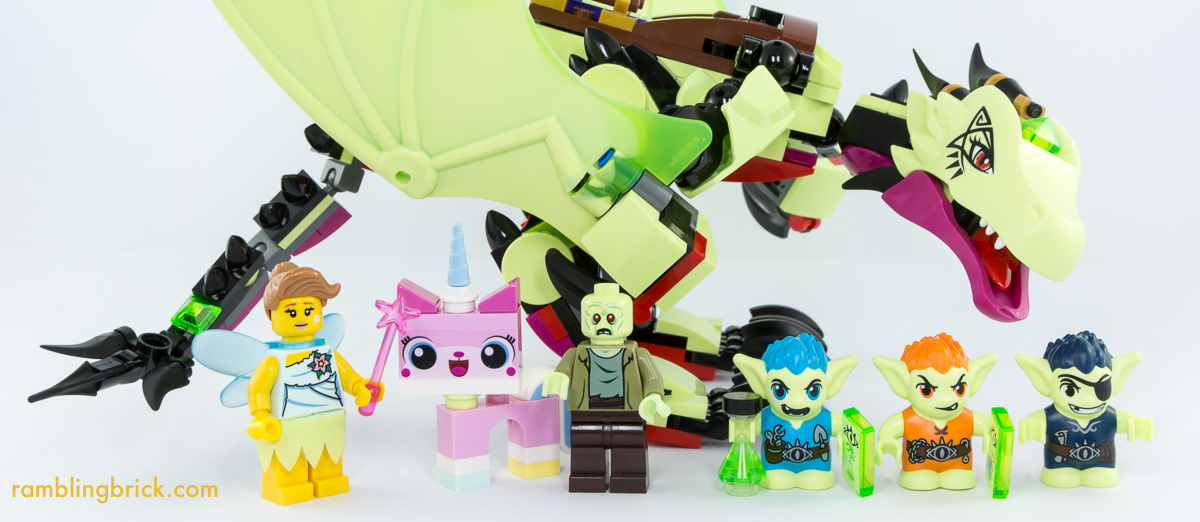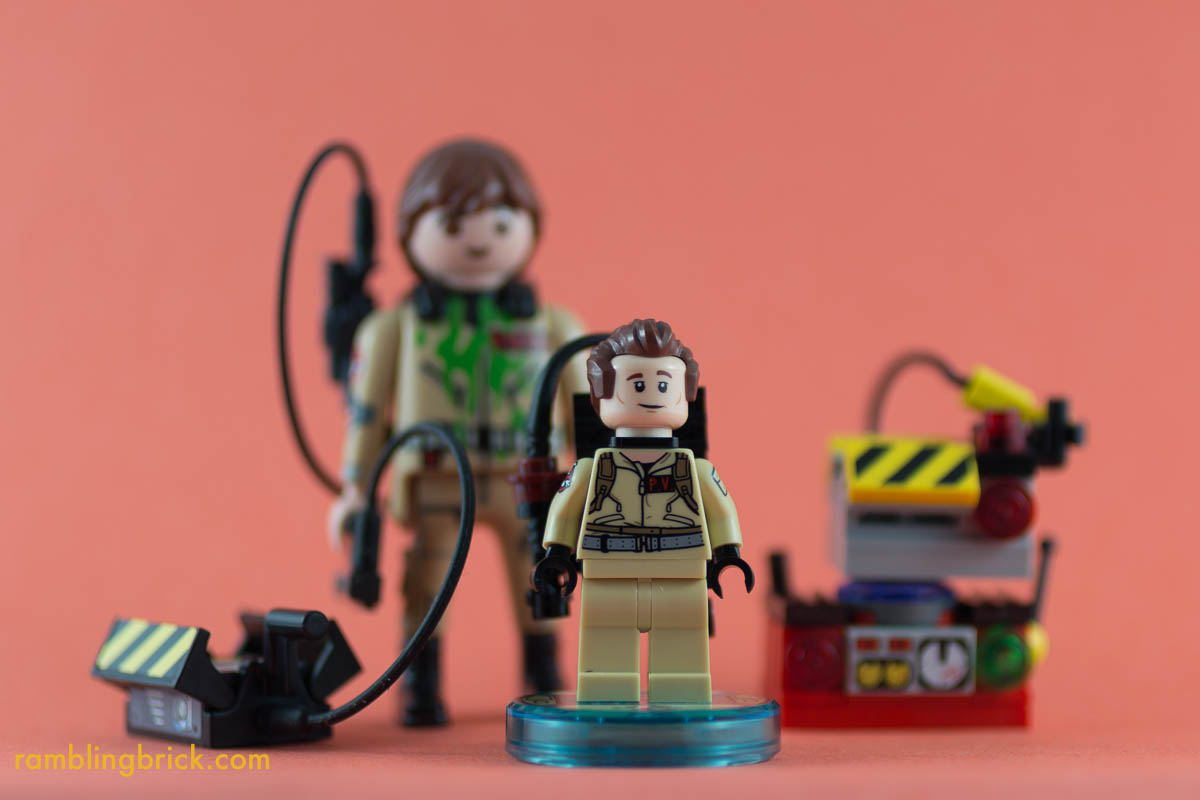
A few weeks ago, I started to consider the use of colour in Elves sets, particularly Spring Yellowish Green. This led to a discussion of colour theory in general. We talked about the colour wheel, and how colour themes might be derived using complementary colours; split complementary colours, analagous colours, triads and tetrads, amongst other things.
This is all very well if I have a colour wheel, and I am looking to produce my own pigment, I hear you cry, but we are using LEGO, and the colour palette is pretty clearly defined. But how do the colours we have relate to this? Continue reading →
The Recognised LEGO Fan Media Days provided a great opportunity to meet representatives of other LEGO Fan Media from around the world. In conjunction with the team from RevistaBricks, and HispaBrick Magazine, we reconstructed our meeting with then CEO Bali Padda. The article that follows is reproduced from HispaBrick Magazine 28, which is now available for download.
As part of the LEGO® Fan Media Days at the end of May 2017, the represented LEGO® Fan Media organisations were joined by the CEO of the LEGO® Group, Bali Padda, for a dialog. He has been with the LEGO® Group for 15 years, initially based in the United States, and then in the UK, where he has been in the role of Chief Operations Officer.
While the appointment of his successor, Niels B. Christiansen, has already been announced, Mr Padda gave us some interesting insights into some of the issues currently facing the company:
RLFMs: You have now been in your new role for around six months. What do you think are the challenges in this new role?
In which I try to reconcile a colour that produces a disturbing personal reaction with some of my favorite sets of the year so far! Along the way we take a history lesson, explore the wonderful world of colour wheels, build a Wyvern and hopefully prepare to enjoy some frozen yoghurt…
It’s been a little while since my last post because I have been trying to reconcile something that has been troubling me. Here in the Southern Hemisphere, we have just seen the start of spring. A time that the weather starts to turn for the better, we feel the days getting a little longer and the grass starts to grow and trees start to bud. It is of course still jolly cold. My problem comes from trying to reconcile springtime, with its new growth, hope and optimism with the name of Spring Yellowish Green. A light, bright colour whose name shouts optimism, but whose shade, to me, shouts sinister thoughts, nasty infections and recollections of a bad night at work.
Of course, not everyone has the perceives colours in the same way as other people. I personally spent 5 years vigourously debating the colour of some towels with my wife. I eventually conceded defeat and accepted that I was wrong. But not because discretion is the greater part of valour, but because it became apparent that I experience a mild form of colour blindness . The junction of green, grey, blue is not a clear, well discriminated area of my colour perception. Rather, it is a hazy, muddy thing, where some colours stand out, and others blur together with imperceptible difference to myself, but to great embarrassment to my children, or frustration for my wife. Whilst I only experience this lack of colour vision, the rest of my family suffer because of it!
But what does this have to do with LEGO Bricks? LEGO elements have appeared in almost one hundred distinct opaque colours over the years, to say nothing of the transparent, translucent, speckled and glow in the dark colours. Well, distinct for some. For others they just blur together. You can find Rylie Howeter’s most excellent colour chart documenting LEGO colours, and their appearance over time, here. Much of the information regarding appearance dates for colours, as well as hex codes for colour pickers has been derived from this. The current colours in the LEGO Colour palette can be seen here:
Current colours in the LEGO moulding palette. Image sourced from brickiest.com, courtesy of the LEGO Group.
In 2012, we saw elements produced in six new colours, and another was released shortly after: Aqua, Dark Azur, Olive Green, Medium Azur, Medium Lavender, Lavender and Spring Yellowish Green. Olive green is the only one of these opaque colours that has been introduced after the Friends theme was released. Only one of these colours has ever evoked a visceral response in me, just by looking at it. And that is the colour I would like to talk about today. Continue reading →
I haven’t only played with LEGO in my life. Back in Christmas 1974 we received our first Playmobil Knights sets. We were frustrated by the legs being locked together, and I managed to give one of our figures independently moving legs. It took quite a bit of force!
First Generation Playmobil Knights c. 1974
I hadn’t ever really considered Playmobil to be a competitor with LEGO as I grew up. One was for building with, one was for role play/ setting up dioramas. That was easy in 1975, before mini figures with silly faces and moving limbs existed. And that seems to be how it has been culturally in Australia. LEGO is available in most toy shops and department stores, and large retailers (Thinking target, Kmart, Big W) While Playmobil has almost exclusively been in the domain of the smaller, independent toy shop. We have continued to pick up the occasional playmobil set, especially for Grandma and Grandpa’s holiday house, where our children would often play with them. With the exception of a nurse in 1978, be have basically stuck with variations of the medieval theme.
I knew Playmobil had continued to be a thing, but I hadn’t really worried about it. Then coming home through Belgium in 2016, I saw an orange Porsche 911 on the shelves at the Duty Free Shop in the airport.
If any element over the years has been used to represent the concept of the LEGO® system of play, this is it.
One of the original elements in the LEGO brick parts palette, it is the first piece that springs to mind when many of us think of LEGO® Bricks. The favourite element of many large scale builders, if you have enough of them, you can build almost anything! It is one of those pieces that brings memories flooding back to those of us raised on basic sets back in the early to mid 1970’s. Before the advent of the minifigure, this brick was the cornerstone of LEGO construction, being a significant component of the Basic/ Universal Construction Sets that were commonly played with in this era. While allowing an incredibly versatile method of construction, there is no doubt that that they contributed significantly to the chunky aesthetic that is associated with LEGO® design and construction in my childhood. When your parents say “In my day, it was just bricks,” this is what they are talking about. Continue reading →
There is no doubt that adding lighting to a LEGO model will enhance it’s appearance – it adds a degree of life to it, enhancing lines, lightening shadows and highlighting features which may otherwise be a little obscure. LEGO have offered lighting for at least 50 years, originally in the form of a light brick, with the options of a filter, and more recently with power functions, providing a pair of LED lights. We now also see self-contained light bricks in recent sets.
While earlier LEGO® sets used standard filament bulbs, more recently builders have been able to look to Light Emitting Diodes (LEDs) to provide versatile lighting solutions. Recently, LEGO builders have been incorporating lighting into their builds more often than ever before.
The systems used vary from simple ‘bulb and battery’ solutions, through to custom solutions for individual LEGO Sets. There are also sophisticated, microprocessor controlled solutions available, providing preprogrammed sequential lighting patterns. Miniaturisation of LEDs means that they are now able to be incorporated in LEGO builds, with minimal rebuilding required for wiring.
Today, I would like to present a couple of simple options for cheap and easy lighting solutions, that can enhance your models. In the future, I will present some examples of other, more sophisticated lighting solutions. Continue reading →
Or how I decided to curb my spending, in the face of conflicting desires.
I love LEGO® Sets.
I love what I have seen in trailers for the LEGO® Batman™ Movie.
I love the look of the LEGO® Batman™ Movie Sets.
The first wave of sets have recently arrived on the shelves here, and I have found myself trying to work out how to balance my LEGO® Batman™ Movie needs (favorite characters and vehicles) against my other LEGO® desires (Elves with goblins; some classic sets and possibly even the Boost robotics system) and my basic human requirements: food, coffee, deodorant, etc…
I have added up the retail prices of all the currently available LEGO® Batman™ Movie Sets (70900-70911) – excluding polybags, as they are rarely available here – and added in the not yet formally announced(70912-70917) with speculated Australian pricing. This came to a total of approximately Continue reading →
This is what I was hearing from the shop.LEGO.com banner ads as October 2016 got underway. Should these statements affect whether or not I go to the online LEGO store? I sat down to work out a solution to this conundrum, and who knows, it might just influence my behaviour in the future…
[Editors note: the principles of calculating the best value time to purchase from shop.LEGO.com, or your local LEGO store are consistant, however individual thresholds for shipping and the value of special offers vary between markets. You should always make your own decisions regarding your own money. The LEGO Group is sure to release something else that you wish to buy in the future, so don’t worry if you can’t spend all of your money at once. Now read on…]
Conscious that I had not place a shop.LEGO.com order for some time, the LEGO Group offered this bonus gift with purchase over $120. My will crumbled instantly.
The shop.LEGO.com promotion for October, if ordering from Australia, was the London bus set (40220). Initially revealed around the same time of the ‘Big Ben’ Creator set, it instantly appealed to me. Decidedly smaller than minifigure scale, it reminded me almost instantly of the sets available in my childhood. In those days, many ‘LEGOLand’ vehicles were 4 studs wide, whether they were a go-cart, family car, a fire truck, and earthmover or a semi-trailer. This is a set that I was terribly keen to get my hands on.
And it got me thinking: What should encourage me to make a purchase from shop.LEGO.com, when many of my local major retailers regularly offer 20% purchase price? Continue reading →
This post has been a while coming. It’s a bit long. It may take a while to read…best get a drink.
Sorry about that!
When I was a boy, and we rode dinosaurs to school, life was a little more simple than it is today. When the first LEGO mini figures were introduced, they were people. Not really men or women, just people. Their faces all looked the same: depicting the now classic smiley face. The only attempts to define gender, in terms of appearance, came in the form of the hair piece they had on if they were not wearing a hat! In that first year there were four ‘female’ mini figures released: they had hair with pigtails. If they were wearing a hat, you could quite happily identify that knight, policeman or astronaut as male or female as you should choose.
The designers have only attempted to define the gender of one of these minifigures.
Two of these ‘people with hair, defining their gender as female’ came as the only figure in their sets, along with vehicles: one an ambulance (606) and one a ‘Red Cross’ car(623). Another worked at the service station (376) and the final one came with a home (377). There was also a female passenger with a railway carriage. in 1979, the first classic ‘male’ minifigure hair appeared. In this first year, printed torsos were still a year or two away, and defining your minifigure’s identity came down to the sticker that you placed on the torso piece.
The recent unveiling of a new LEGO Death Star has led to much discussion about sets being reissued, and the effect that such reissued may have have on speculative resale values. Reissues of LEGO sets are not new, and have been occurring for years.
Today, I am going to look at some of the recent reissues, and address some of the controversy that has arisen. This article does not constitute investment advice, and I am not qualified to offer you any. Talk of future sets should be considered to be a figment of my wild imagination, and nothing more. If any of it comes to pass, it’s through good luck rather than inside information.
Some times sets get re-released because of an update in pieces, colour palette or building techniques. Sometimes it’s because of a reinvigoration of theme. Sometimes, however, the whole theme’s source material gets rebooted, leaving the sets ripe for a reissue. So why is it $AU30 more expensive for an equivalent set, on sale in parallel with the original sets.